Location-Based Content Personalization: What, Why, and How
Location-based personalization drives a 19% average uplift in sales. Learn what to personalize, how to implement it without FOUC, and why edge-based execution matters.
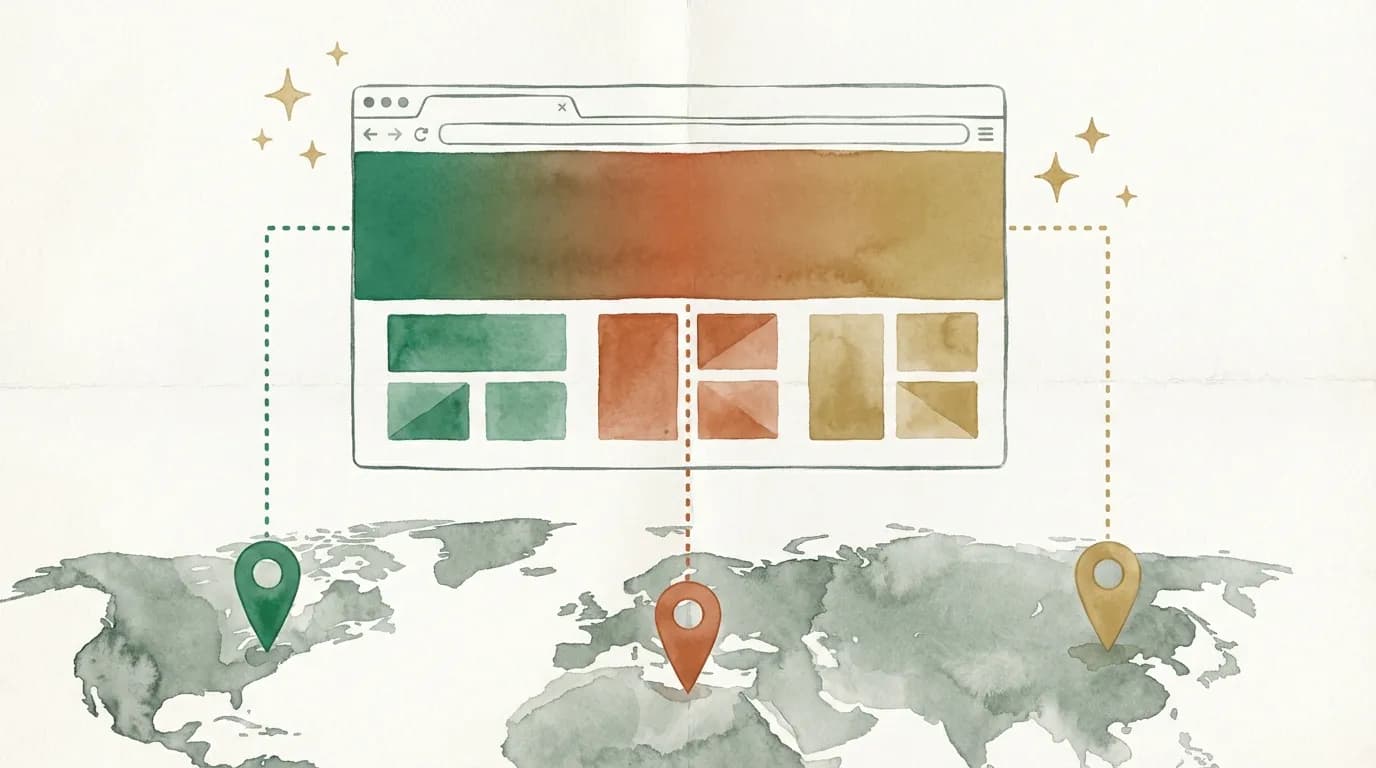
Location-based content personalization is the practice of dynamically adjusting what a visitor sees based on where they are. It goes beyond simple language translation — it means tailoring messaging, imagery, offers, and entire page layouts to match regional expectations. Here is everything you need to know to implement it effectively. For a broader introduction, see our complete guide to geo-targeting.
What you can personalize
Most teams start with text, but location-based personalization extends to virtually every element on your page:
- Headlines and CTAs: “Start your free trial” can become “Starten Sie Ihre kostenlose Testversion” for German visitors.
- Hero images: Show Sydney's skyline to Australian visitors and London's to UK visitors.
- Social proof: Display testimonials from customers in the visitor's region for greater trust.
- Phone numbers: Show local support numbers automatically.
- Pricing: Display currency-appropriate pricing without maintaining separate pages.
- Legal notices: Show GDPR banners only to EU visitors, CCPA notices to Californians.
Implementation methods compared
There are three primary approaches to location-based personalization, each with distinct trade-offs:
- Server-side rendering: The server detects location and returns different HTML. Fastest, no FOUC, but requires backend infrastructure and is complex to maintain.
- Client-side JavaScript: A script runs after page load and swaps content. Easiest to implement but causes flash-of-unstyled-content (FOUC) and can feel jarring.
- Edge-based execution: Content decisions happen at the CDN edge before the page reaches the browser. Combines the speed of server-side with the simplicity of client-side. This is how GeoSwap works.
The ROI of personalization
The numbers make a compelling case. HubSpot found that personalized CTAs convert 202% better than default or generic versions. And according to McKinsey, 71% of consumers expect personalized interactions, while 76% get frustrated when it doesn't happen. The impact is even more pronounced for international businesses where cultural and linguistic relevance directly affects purchase intent.
“Considering the data from our survey, there should be no question about localizing your website.”
Consider these data points: 76% of consumers prefer buying in their native language. 92% prefer pricing in local currency. And 40% will never buy from sites in other languages. The business case for personalization is overwhelming.
Preventing FOUC
Flash-of-unstyled-content is the moment when a visitor sees the default content before personalized content loads. It looks broken. It erodes trust. Client-side solutions inherently suffer from this problem.
GeoSwap eliminates FOUC by executing at the edge. The visitor's location is resolved before the HTML even reaches their browser, so the personalized version is the only version they ever see.
Getting started with GeoSwap
- Add the GeoSwap script tag to your site
- Identify high-impact elements to personalize (start with CTAs and pricing)
- Create location rules in the GeoSwap content personalization dashboard
- Preview using the location override tool
- Monitor performance in GeoSwap analytics
Location-based personalization is not a nice-to-have anymore. It is a baseline expectation for international visitors. GeoSwap makes it accessible to any website, on any platform, at zero cost. Preview your personalized pages from different locations with our free Geo Browse tool, and check out the full Geo Content documentation for advanced configuration.