Show Different Pricing by Country: Complete Guide
What is purchasing power parity (PPP) and how does it apply to pricing? Learn how to show different prices by country, PPP-adjusted pricing strategies, implementation methods, and how to swap prices without content flicker.
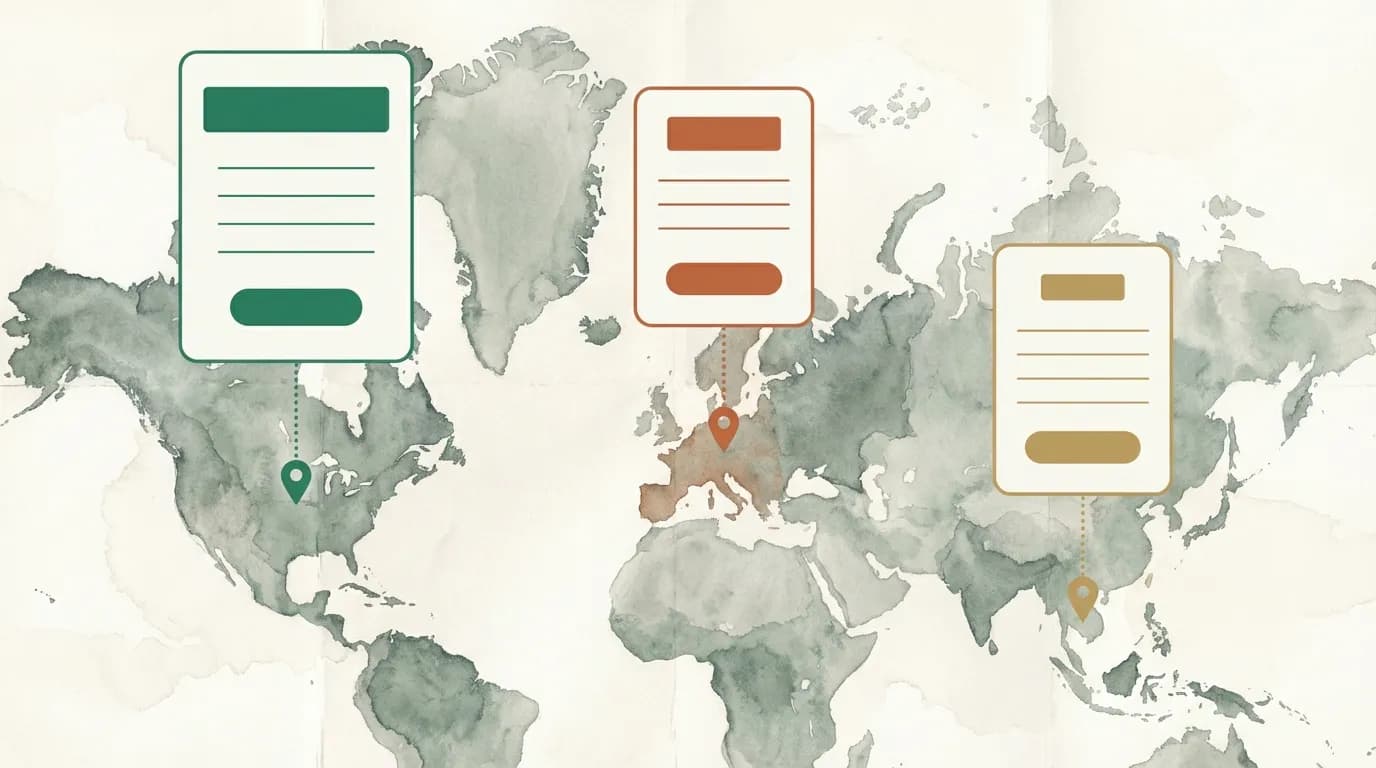
A product priced at $99 in the US has very different purchasing power in India, Brazil, or Poland. Localized pricing — showing different prices based on a visitor's country — is one of the most effective geo-targeting strategies to increase international conversion rates. Here's how to do it right.
What is Purchasing Power Parity (PPP)?
Purchasing power parity (PPP) is an economic theory that compares the purchasing power of different currencies by measuring how much a standardized basket of goods costs in each country. In simpler terms, PPP tells you what $1 is actually "worth" in different economies.
For example, if a subscription costs $99/month in the US, that same $99 represents roughly $400 in purchasing power in India and about $200 in Brazil. A customer in Mumbai earning a good local salary would need to spend a disproportionate share of their income compared to someone in San Francisco.
The World Bank publishes PPP conversion factors annually, and organizations like the International Comparison Program (ICP) maintain the data. The most famous illustration is The Economist's Big Mac Index, which uses the price of a McDonald's Big Mac as a simplified PPP benchmark across 70+ countries.
For SaaS and digital products, PPP-adjusted pricing means setting different price points for different countries based on their relative purchasing power. Companies like Spotify, Netflix, and many indie SaaS tools already do this — and the conversion lift is significant.
Why localize pricing?
The case for localized pricing is backed by data:
- Purchasing power parity (PPP): $99 USD represents very different values in different economies. In India, that's roughly equivalent to $400 in local purchasing power.
- Conversion impact: According to Crisol Translations, displaying prices in local currency can increase conversion rates by up to 40%. Conversely, 33% of shoppers abandon their carts when shown USD-only pricing.
- Language and currency: CSA Research found that 76% of online shoppers prefer to buy products with information in their native language — and currency display is a key part of that localized experience.
“Purchasing power parity pricing is the single highest-leverage change a SaaS company can make for international revenue. We've seen companies double their non-US revenue by implementing PPP pricing alone.”
Approaches to localized pricing
There are three common strategies:
- Currency conversion only: Same price, different currency display. $99 becomes €91 or £78. Easiest to implement, minimal revenue impact.
- PPP-adjusted pricing: Adjust prices based on purchasing power parity. $99 in the US might become $49 in India or $69 in Brazil. Higher conversion rates but requires careful calibration.
- Market-based pricing: Set prices per country based on competitive analysis, willingness to pay, and local market conditions. Most complex, highest potential revenue.
Implementation methods
How you technically deliver localized pricing depends on your platform:
- Payment processor integration: Stripe and Paddle support multi-currency pricing natively. You define prices per currency and they handle display and conversion.
- JavaScript-based swapping: Detect the visitor's country, then swap the displayed price via JavaScript. Simple but causes a visible price flicker (FOUC).
- Edge-based content rules: GeoSwap's Geo Content can swap pricing elements before the page renders. No flicker, no CLS impact. Define rules like “show $49 to visitors from India” and the edge handles the rest.
Ethical considerations
Localized pricing raises legitimate ethical questions that you should address proactively:
- Transparency: Be upfront that pricing varies by region. Some companies add a note like “Pricing adjusted for your region” on the pricing page.
- VPN arbitrage: Some users will use VPNs to access lower prices. Decide whether to enforce pricing via payment address or accept some leakage as a cost of doing business.
- Consistency: If a user sees $49 on your pricing page, they should see $49 at checkout. Mismatches between display price and checkout price destroy trust.
- Legal compliance: Some jurisdictions have specific requirements around price display and discrimination. Consult local regulations for your key markets.
Setting it up with GeoSwap
GeoSwap's content rules make pricing localization straightforward:
- Identify the CSS selector for your pricing element (e.g.,
.pricing-amount). - Create content rules for each target country with the localized price.
- The edge worker swaps the content before the page renders — no flicker, no JavaScript dependency.
For SaaS pricing pages, this is especially powerful. You can show PPP-adjusted prices to visitors from lower-income markets while keeping standard pricing for higher-income markets, all without any code changes to your website. Preview how your pricing page looks from different countries using our Geo Browse tool.
Localized pricing is one of the highest-ROI changes you can make for international revenue. For SaaS-specific strategies, see our guide to geo redirects for SaaS. With GeoSwap, the implementation takes minutes, costs nothing, and eliminates the FOUC problem that plagues JavaScript-based approaches.